
Your First 72 Hours After a Bad Call Can Make or Break Your Career
Get the tactical protocol that helps officers recover from critical incidents and stay operational throughout their careers.
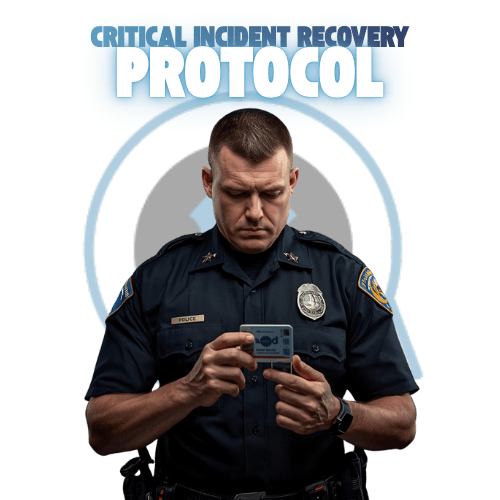
You Just Worked a Call That's Different
Could be an OIS. Dead kid. Partner down. The kind where everyone at the scene goes quiet for a second.
Your supervisor asks if you're good. You say yes because that's what you say.
But you know this one's going to stick.
Most officers will work 178 critical incidents over 25 years. 5-10 of those are the kind that change you.
What you do in the next 72 hours determines whether that change destroys your career or makes you stronger.
Your Department Probably Has a Critical Incident Response Plan
Show up to CISD. Talk to EAP if you need it. Take a couple days off.
Here's what they don't tell you:
The 72 hours after a critical incident are when your brain is most flexible. Interventions work better. Patterns get set. Your response right now trains your brain how to handle the next one.
Most officers don't know what to do in this window.
So they do nothing. Or they do the wrong things. And six months later they're struggling with nightmares, can't stop checking doors and weapons, always scanning for threats, or worse.
By then, it's harder to fix.
The Critical Incident Recovery Protocol is a tactical, hour-by-hour guide for the first 72 hours after a traumatic call.
What You Get With the FREE Protocol
Full Protocol Guide (2 pages) Complete hour-by-hour breakdown with specific actions, warning signs, and the neuroscience behind why this works.
Wallet Reference Card
Credit card-sized quick reference you can actually carry. Front covers 0-24 hours, back covers 24-72 hours.
The Science Explained
Why the 72-hour window matters and what's happening in your brain during critical incident recovery.
Critical Contact Template
Fill in your department's peer support, EAP, and chaplain numbers so they're ready when you need them.
It covers:
Immediate actions at scene and end of shift (Hrs 0-6)
Stabilization strategies for the morning after (Hrs 6-24)
Processing phase when the adrenaline crashes (Hrs 24-48)
Integration phase as your brain adapts (Hrs 48-72)
Warning signs that separate normal reactions from professional help
Specific physical, mental, and social actions proven to work
This protocol is for officers who:
Just worked a critical incident and need to know what to do RIGHT NOW
Want to be prepared before the next bad call happens
Are squad leaders responsible for officers after traumatic events
Recognize that 25-year careers require proactive resilience, in addition to reactive crisis management
This isn't therapy. It's tactical recovery.
Built on a Solid Foundation
This protocol is built on the Predictive 6-Factor Resilience (PR6) model—peer-reviewed research on what keeps high-adversity professionals operational in the long term.
Officers who use these strategies consistently show:
40% lower burnout rates
33% better at staying regulated under pressure
24% higher job satisfaction
Measurably better outcomes after critical incidents
The research is clear: what you do in the first 72 hours matters.
We respect your privacy. No spam. Unsubscribe anytime. You'll get the protocol immediately, plus occasional emails from Police Speak

© 2026 Police Speak
All rights reserved

Critical Incident Recovery Protocol
Enter your information below, and we'll send you the link to your FREE Critical Incident Recovery Protocol.
We HATE spam. Your email address is 100% secure